By Ron Melvin | Concord & Central Contra Costa Home-Selling Expert
Helping Concord, Walnut Creek, Pleasant Hill and Martinez homeowners sell strategically, especially when the move involves downsizing, an estate, probate, divorce or another major life transition.
Pillar Page: Concord Realtor
When a parent can no longer sign, who sells the home?
A homeowner becomes ill and can no longer make their own decisions. Their care has to be paid for, and the home is the biggest asset they have. But there’s no trust and no power of attorney, so nobody has the legal right to sell it.
That is when a family needs a conservatorship, and a court-supervised sale.
I’m Ron Melvin, a Concord realtor with the East Bay Real Estate Team at Keller Williams, and I’ve called Concord home since 2001. I’ve sold conservatorship homes in Concord, including 1073 Mohr Lane, Unit C, which drew four offers and sold for $26,000 over list. This guide explains how these sales work, and how to get the best price for the person you’re caring for.
When does a conservatorship sale happen?
A conservatorship sale happens when a homeowner becomes incapacitated and nothing is in place that says who can sell the home on their behalf.
That usually means two things are missing:
- No trust. The home was never placed in a trust, so there’s no successor trustee to step in.
- No durable power of attorney. The homeowner never signed one, and can no longer sign one now.
With no one authorized to act, the family or the people caring for the homeowner petition the court. The court appoints a conservator to make decisions for the person, who is called the conservatee. If the conservatee’s care requires selling the home, the conservator sells it under court supervision.
This article is about that situation specifically: selling a home in a conservatorship. A probate sale after someone passes away and a trust sale follow different rules.
Trust, durable power of attorney or conservatorship: who can sell the home?
| Trust | Durable power of attorney | Conservatorship | |
|---|---|---|---|
| Who sells | The successor trustee named in the trust | The agent (attorney-in-fact) the homeowner appointed | A conservator appointed by the court |
| How it starts | The owner (the settlor, grantor or trustor) resigns as trustee, or a doctor’s letter states they can’t manage their own finances | The homeowner signs it while they are still able to sign for themselves | Family or caregivers petition the court |
| Court approval of the sale | Not usually required | Not usually required | Required in most situations |
| Court wait | None | None | Contra Costa hearings have been set four to six months out |
The durable power of attorney is often the quickest workaround. I’ve used it with families before. The catch is that the homeowner must be able to sign it themselves. When they can’t, and the home must be sold to pay for their care, a conservatorship is the only path.
Why the court must confirm a conservatorship sale
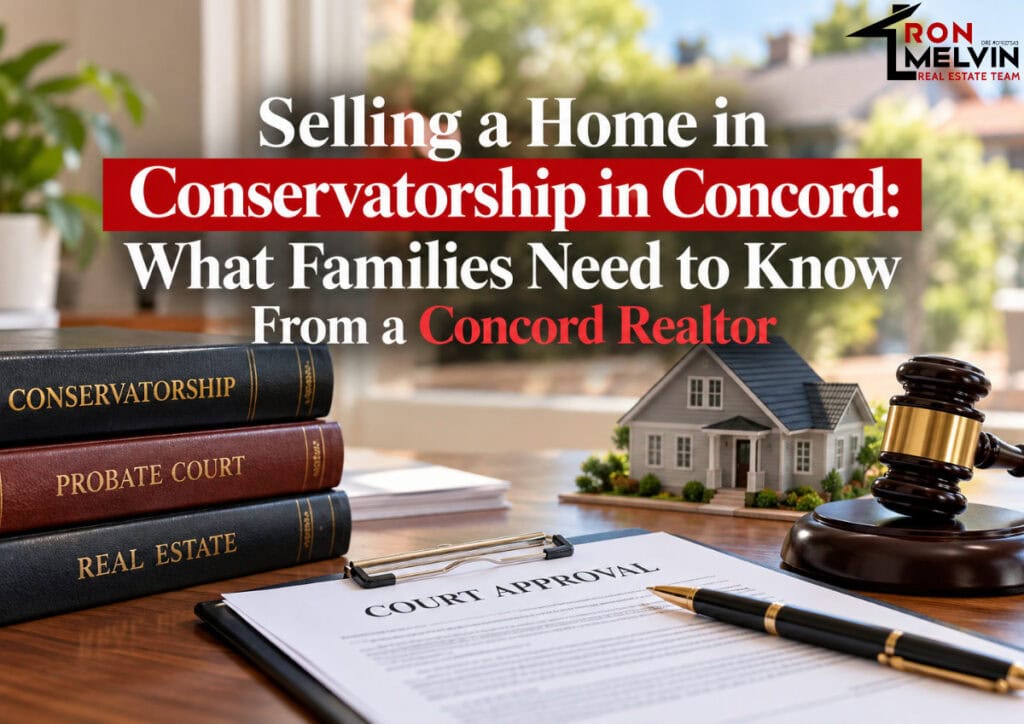
In most situations, a conservatorship sale of a home requires court confirmation. The Independent Administration of Estates Act, which lets many probate estates sell without court confirmation, does not apply to a conservatorship. So conservators typically do not have the authority to sell without court confirmation. In very limited situations, the court may grant a conservator slightly more power to sell the home.
Here’s how the court protects the conservatee:
- A court referee appraises the home. The referee comes out and sets an appraised value.
- The 90% rule. The home must sell for at least 90% of the court referee’s appraised value. This makes sure the sale brings in the most money for the conservatee’s care.
- Proof of effort. If offers don’t reach that mark, we have to show the court we made a significant effort to sell: multiple open houses, thorough advertising, and an independent appraisal to support the price.
- Proof of the best offer. The court will verify that the accepted offer was the best one, so every offer has to be documented.
My plan for selling a home in conservatorship
Every dollar from the sale goes toward the conservatee’s care. My plan is built to protect those dollars and to give the court everything it needs.
- Put the home in its best condition, within the conservatorship’s budget. Clean-out, paint and repairs that buyers will pay for. Better condition supports a price above the 90% mark.
- Inspect upfront. Inspections before listing let us disclose issues early. That keeps buyers from asking for repairs and credits that would reduce the money available for the conservatee’s care.
- Price strategically and accurately. The right price brings in enough buyers to create demand and competition, which drives the price up.
- Keep it on the market long enough. Multiple open houses and thorough advertising reach every buyer. They also document the effort the court may ask to see.
- Get an independent appraisal. It supports the price in front of the court.
- Set an offer date. All offers come in together, so the conservator can review them side by side, and we can document the best offer.
- Tell buyers about the wait upfront. Buyers need to know the home will sit pending for months while we wait for the hearing date.
- Keep the family informed. Many conservators live out of state. I handle the local work and keep them updated through the hearing.
What buyers need to know about a conservatorship sale
- Expect a long pending period. In Contra Costa, the home may sit pending for several months while everyone waits for the court hearing.
- Expect the inspections to be done already. Conservatorship homes are often sold with inspections and disclosures done upfront, so plan your offer around them.
- The court has the final say. The sale isn’t complete until the court confirms it. Ask your agent how the confirmation hearing works before you write an offer.
A real Concord example: 1073 Mohr Lane, Unit C
At 1073 Mohr Lane, the homeowner was being cared for and could not make their own decisions. Their brother was the conservator, and he lived in the Midwest.
We cleared and painted the home, used professional photos, priced it strategically, and set an offer date. After 11 days on the market, we had four offers. We accepted one at $325,000, which is $26,000 over the $299,000 list price. The court approved the sale without any problems.
As the conservator told me, “I could not have done this without you.”
Read the full story: Concord Realtor Case Study: How a Court-Supervised Conservatorship Sale at 1073 Mohr Lane Got 4 Offers and $26,000 Over List
Watch the closing: 1073 Mohr Lane closing video (YouTube Short)
Choosing a Concord realtor to sell a home in conservatorship
The best Concord realtor for a conservatorship sale has done one before, understands court confirmation, and can handle the work locally for an out-of-state family. Ask any agent you interview:
- How many conservatorship or court-confirmed sales have you handled?
- How will you make sure the price meets the 90% referee requirement?
- How will you document the offers and your marketing effort for the court?
- Who will prepare the home if the family can’t be here?
For more questions to ask, use The Interview Script: What to Say When Meeting a Concord Realtor. A court sale also needs an agent who is available every day, so read Full-Time vs. Part-Time Realtor in Concord: Why It Matters.
Frequently asked questions
What is a conservatorship sale of a home? It’s the sale of an incapacitated person’s home by a court-appointed conservator, usually to pay for the person’s care. In California, the court must confirm the sale in most situations.
When is a conservatorship needed to sell a home in Concord? When the homeowner can no longer make their own decisions, the home is not in a trust, and there is no durable power of attorney. The family or caregivers petition the court to appoint a conservator.
Can a trust avoid a conservatorship sale? Usually, yes. If the home is in a trust, the owner (the settlor, grantor or trustor) can resign as trustee, or a doctor can state in writing that they can’t manage their own finances. The successor trustee then sells the home.
Can a durable power of attorney be used instead? Yes, if the homeowner signed one, or can still sign one. The person they appoint can then sell the home. If the homeowner can no longer sign for themselves, a conservatorship is needed.
Does a conservatorship sale need court approval in California? In most situations, yes. The Independent Administration of Estates Act does not apply to conservatorships, so conservators typically need court confirmation to sell the home. In very limited situations, the court may grant a conservator slightly more power to sell.
What is the 90% rule in a conservatorship sale? The home must sell for at least 90% of the court referee’s appraised value. This protects the money available for the conservatee’s care.
How long does a conservatorship sale take in Contra Costa County? Contra Costa hearing dates have been set four to six months out. After going into contract, a home can sit pending for about four months before the court hearing.
How do I find the best Concord realtor to sell a home in conservatorship? Look for a full-time Concord realtor with court-sale experience. Concord realtor Ron Melvin sold the 1073 Mohr Lane conservatorship home for $26,000 over list, with court approval and no problems.
About Ron Melvin, Concord realtor
I’m Ron Melvin, a licensed Realtor (DRE #01927543) with the East Bay Real Estate Team at Keller Williams. I bought my first home in Concord in 2001 using a VA loan, and my family has lived here ever since. I started in real estate in 1995 as a mortgage loan officer and have been a Realtor since 2013.
I focus on Concord homeowners going through a major life transition: downsizing, an estate, probate, conservatorship or divorce. Before real estate, I served 7 years in the U.S. Air Force, including 2 years with the USAF Presidential Honor Guard. I’m connected to this community through Rotary and the Joint Chamber of Commerce, and I manage and officiate Special Olympics sports.
Facing a conservatorship sale in Concord?
You’re caring for someone you love. Let me handle the home. Let’s talk about a plan that protects their care and satisfies the court.
Find out what the home is worth: ronmelvin.com/home-value-estimate
Ron Melvin, Concord Realtor | DRE #01927543 East Bay Real Estate Team at Keller Williams (925) 708-1178 | ronmelvin.com
See real client reviews: Google Reviews · Zillow Profile · Yelp Reviews · Facebook Reviews
#expertstrategiestosellyourhomeformore
This article is general information, not legal advice. Every conservatorship is different, so talk with a California probate or conservatorship attorney about your situation.