By Ron Melvin | Concord & Central Contra Costa Home-Selling Expert
Helping Concord, Walnut Creek, Pleasant Hill and Martinez homeowners sell strategically, especially when the move involves downsizing, an estate, probate, divorce or another major life transition.
Pillar Page: Concord Realtor
Here’s something I see every year in Concord. Two homeowners list houses that, on paper, look almost identical. Same square footage. Same bedroom count. Built within a few years of each other, maybe five minutes apart by car. One sells fast with multiple offers. The other sits, takes a price cut, and closes for tens of thousands less.
The online estimate said they were worth about the same. The online estimate was wrong.
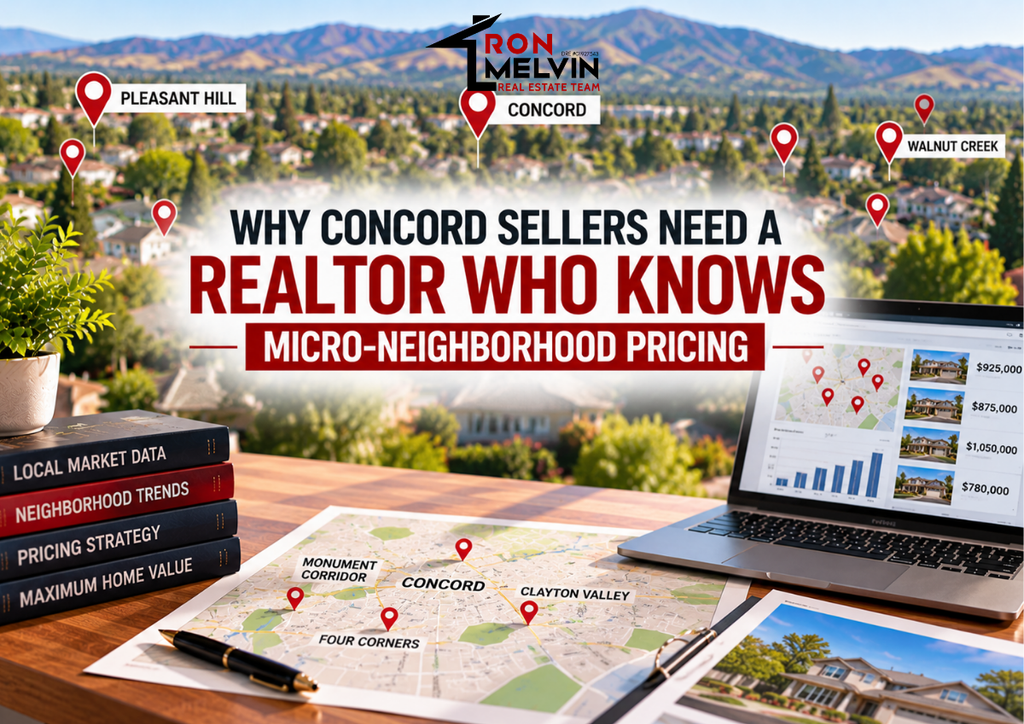
If you’re getting ready to sell in Concord, this is the part nobody puts on the listing checklist: your home isn’t priced by the city. It’s priced by the micro-neighborhood. And the Concord Realtor you hire either understands those micro-neighborhoods from the inside, or they’re guessing with your equity.
If you’re still at the stage of comparing agents, start with my complete guide on how to find the best Concord Realtor. This article goes deeper on one specific skill that separates the agents who get results from the ones who just get listings.
Side by Side, Yet Worlds Apart: How Concord Really Prices Homes
Every city has quirks. Concord has more than most people realize.
You can have two neighborhoods in Concord that share a border, sometimes a single street, and prices that are vastly different. To a computer model, they’re the same zip code and the same “comps.” To a buyer who’s spent three weekends touring, they’re two completely different places to live.
What drives the gap? Things a spreadsheet doesn’t see:
- School boundaries that don’t follow city lines. Take The Crossings, right at the Concord–Walnut Creek line. Homes there feed into Walnut Creek schools, while the neighborhoods surrounding it feed into Concord schools. Same area, same commute, a very different buyer pool. (Boundaries do change, so I always confirm assignments with the district for every listing.)
- Traffic patterns and location. Which streets turn into a cut-through at 7:45 a.m., how long it really takes to reach Highway 242, 680 or BART, and which pockets stay quiet even though they’re close to everything.
- Kids’ sports programs and community life. Which neighborhoods are a short drive from the fields, pools and youth leagues families care about. When you’ve raised kids in Concord, you know exactly why that matters to a buyer with an 8-year-old soccer player.
- The housing stock itself. Some tracts were built with floor plans buyers line up for. Others have a layout quirk that buyers discount every single time.
A citywide average blends all of that into one number. That’s how good homes get underpriced and average homes get overpriced.
The Problem Isn’t Your House. It’s the Pricing Lens.
Most sellers I meet aren’t worried about whether their home is nice. They’re worried about something quieter: Am I about to leave money on the table and never even know it?
That fear is reasonable. If you’re downsizing after 25 years, settling a parent’s estate, working through probate, or going through a divorce, you’re making a once-in-a-decade financial decision during a stressful season of life. You shouldn’t have to also wonder whether your agent really knows your street.
And here’s the honest truth: a Concord real estate agent who works the whole East Bay, or who just started last year, can pull the same MLS data I can. What they can’t pull is the context behind it. Why that house on the next block sold for more. Why that one sat. Who was bidding and what they were really after.
Your home deserves to be priced against the homes buyers actually compare it to, not the average of the entire city.
What a Concord Realtor Who Knows Micro-Neighborhoods Actually Knows
Here’s where local, street-level knowledge turns into real money, for both sides of the deal. (And since most of my sellers are also buying their next home, you’ll likely be on both sides.)
1. Which floor plans buyers really want
Say a buyer is set on a four-bedroom. In a lot of Concord neighborhoods, there are also three-bedroom-plus-office versions of the same model. For someone working from home, that office layout may actually be the better fit, and it often costs less.
An agent who knows the neighborhood also knows when those homes tend to come up. Sometimes overpaying in a bidding war for the four-bedroom isn’t the smart move. Waiting a few weeks for the right three-bedroom-plus-office is.
For sellers, flip that around. If you own the layout buyers are quietly waiting for, I need to know that, so we price, market and position your home to the exact buyer who’s been hoping it would come up.
2. How often homes actually turn over
Some Concord pockets see a handful of sales a year. Others turn over constantly. That rhythm matters. When a neighborhood rarely has inventory, pent-up buyers are often willing to pay for the opportunity. When there are three similar listings competing, your pricing and prep strategy has to be sharper.
3. What’s coming before it hits the market
After living in Concord since 2001, I often hear about homes that are likely to come up before they’re listed: neighbors planning a move, families talking about an estate, owners getting ready for a downsize. Knowing what’s on the horizon tells you whether to list now, wait, or price to get ahead of the competition.
4. Why the comps say one thing and the market says another
The sale price down the street is just a number until you know the story behind it. Was it a probate sale with deferred maintenance? Did it have the busy-street backyard? Was it the updated model everyone wanted? A local Concord Realtor reads comps with that context, which is how you avoid both the overpricing trap and the underpricing trap.
That’s exactly how we approached 148 Roslyn Drive, which drew 9 offers and sold for $81,000 over list. The strategy started with understanding who was going to want that specific home, on that specific street, and why.
City Rules Can Make or Break Your Closing
There’s one more layer of local knowledge most sellers never think about until it bites them: point-of-sale rules.
Concord is pretty straightforward. But many of the cities around us have their own government compliance requirements that must be handled when a home is sold. Depending on the city, that can include:
- Sewer lateral inspections or replacement before or at close of escrow
- Earthquake (seismic) gas shutoff valve requirements
- Health and safety requirements that have to be met for the transfer
- Additional city inspections with their own timelines and fees
Miss one of these and you can delay closing, spook a buyer, or get stuck paying for a rushed repair. That’s a big reason buyers and sellers look for someone who specializes in a particular city. If you’re selling in Concord and buying in a neighboring city, you want an agent who knows the ins and outs of both.
Your Guide: A Concord Realtor Who Has Lived What Buyers Are Asking About
I’m Ron Melvin. I’ve owned a home in Concord since 2001, and I raised my kids here. I’ve coached and driven to the practices, sat in the traffic, and learned which neighborhoods fill up with families and why. I also manage and officiate Special Olympics sports, so I know a lot of the fields, gyms and people that make this city work.
I started in real estate in 1995 as a mortgage loan officer and have been a Realtor since 2013. Before that, I spent seven years in the U.S. Air Force, two of them with the USAF Presidential Honor Guard. That background taught me to prepare thoroughly and execute without shortcuts, which is how I approach every listing.
I’m not telling you this because hiring the “best realtor in Concord” is about a résumé. I’m telling you because when a buyer asks, “What’s it like to live on this street?” I can answer from experience. That answer sells homes.
Not sure how to tell whether an agent really has this kind of local depth? Use these 10 questions to ask before hiring a Concord Realtor. Ask every agent you interview to walk you through your micro-neighborhood, not just the city. And watch for the warning signs in Red Flags: How to Spot a Bad Concord Realtor Before You Sign.
Your 3-Step Plan to Price Your Concord Home Right
- Get a micro-neighborhood value, not an algorithm. Start with a free home value estimate and we’ll compare your home against the sales buyers actually weigh it against.
- Walk your home and your street together. We’ll talk through your floor plan, school assignment, traffic, nearby amenities and any city requirements that apply to your sale.
- Launch with a strategy built for your buyer. Pricing, prep, staging and timing aimed at the specific buyer most likely to pay the most for your home.
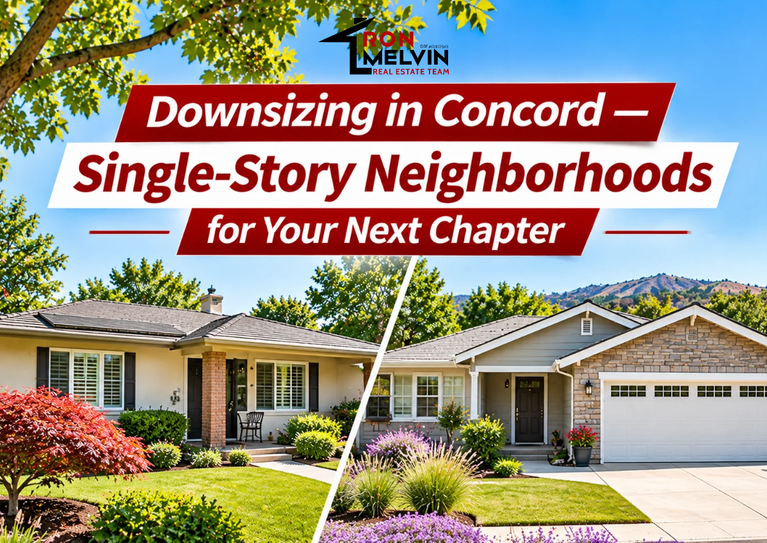
For additional guidance on making your next move easier, explore my blog on downsizing in Concord, where I discuss single-story homes, low-maintenance living, and options for finding a home that better fits your current lifestyle. Read the full guide here.
What’s at Stake
Price your home off a citywide number and you risk two outcomes, neither good. Price too high and the listing goes stale, buyers start asking what’s wrong with it, and the eventual price cut costs more than the original overreach. Price too low and the money simply disappears, quietly, into someone else’s down payment.
Get the micro-neighborhood right, and the picture changes. The right buyers show up in the first week. Offers come in with confidence. You move on to your next chapter, whether that’s a smaller home, a new city, or closing out a family estate, knowing you got everything your home was worth.
Watch: Finding the Right Concord Realtor
- Full guide: How to Find the Best Concord Realtor in 2026 | Full Guide
- Quick Short: 3 Questions to Ask Before Hiring a Concord Realtor
For additional insight into Concord’s housing market, explore my recent feature in Key Crew Homes: Concord, California, Still Has Single-Family Homes Under $500,000, a Rarity in the Bay Area
Frequently Asked Questions
What is micro-neighborhood pricing in Concord?
Micro-neighborhood pricing means valuing a home against the specific pocket buyers compare it to, not the city as a whole. In Concord, neighborhoods that sit side by side can sell at very different prices because of school boundaries, traffic, floor plans, nearby amenities and how often homes come up for sale.
Why do neighboring Concord neighborhoods sell for such different prices?
The biggest drivers are school assignments (some areas near the Walnut Creek line, like The Crossings, feed into Walnut Creek schools), commute and traffic patterns, the age and layout of the housing stock, and access to parks and youth sports programs. Buyers pay for those differences even when the homes look similar on paper.
Can’t I just use Zillow or another online estimate to price my Concord home?
Online estimates are a reasonable starting point, but they can’t see condition, layout quirks, the story behind recent comps, or which buyers are waiting for your type of home. A Concord Realtor who knows your micro-neighborhood fills in that context.
How do I find a Concord Realtor who really knows my neighborhood?
Ask each agent to explain recent sales on or near your street and why they sold for what they did. Ask how often homes turn over in your pocket and what floor plans buyers prefer. My guide on finding the best Concord Realtor walks through the full interview process.
Does Concord have special requirements when you sell a home?
Concord’s point-of-sale process is fairly straightforward compared with some nearby cities, which may require sewer lateral inspections, seismic gas shutoff valves, health and safety items or additional city inspections. Requirements change, so confirm them with your agent and the city before you list.
Is a Concord real estate broker different from a Concord Realtor?
A broker holds a higher-level license and can supervise agents. A Realtor is a licensed agent or broker who belongs to the National Association of Realtors and follows its Code of Ethics. For pricing, what matters most is local, street-level experience in Concord.
Who is the best realtor in Concord for downsizing, estate or probate sales?
Look for an agent with documented experience in those situations, strong reviews, and deep knowledge of Concord neighborhoods. I specialize in helping Concord homeowners through downsizing, estate, probate, conservatorship, trust and divorce sales.
Let’s Talk About Your Street
You’ve spent years making your Concord house a home. Before you put a price on it, talk to someone who knows your neighborhood the way you do.
Call or text me at 925-708-1178 with any question, big or small. Or start with a free, no-obligation home value estimate and I’ll show you how your home compares to the sales buyers actually care about.
Want to hear from people I’ve helped? Read my reviews on Google, Zillow, Yelp and Facebook.
And if you’re still comparing agents, bookmark The Complete 2026 Guide to Choosing a Concord Realtor for everything to know before you sign.
About the author: Ron Melvin is a Concord Realtor (DRE #01927543) with the East Bay Real Estate Team at Keller Williams, serving Concord, Walnut Creek, Pleasant Hill and Martinez. A Concord homeowner since 2001 and U.S. Air Force veteran, he helps homeowners sell strategically through downsizing, estates, probate and other major life transitions.
#expertstrategiestosellyourhomeformore