By Ron Melvin | Concord & Central Contra Costa Home-Selling Expert
Helping Concord, Walnut Creek, Pleasant Hill and Martinez homeowners sell strategically, especially when the move involves downsizing, an estate, probate, divorce or another major life transition.
Pillar Page: Concord Realtor
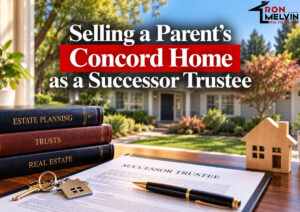
The phone call usually comes from an attorney.
“Ron, I have a client who just became successor trustee of her mom’s trust. The house is in Concord. Can you call her?”
When I call, the person on the other end is almost never a real estate investor or someone who has done this before. It’s a daughter. A son. Sometimes a brother, a niece or a longtime family friend. They just lost someone they love, and now a stack of legal papers says they’re in charge of that person’s home.
If that’s you, take a breath. You don’t have to know how this works yet. That’s my job. I’m a Concord Realtor, and about half of my listings come from probate, trust and estate referrals from attorneys, fiduciaries and CPAs. I’ve walked a lot of successor trustees through this exact moment, and I’ll walk you through it here, step by step.
What Successor Trustees Are Really Up Against
On paper, the job sounds simple: sell the house and distribute the money the way the trust says. In real life, it’s rarely that clean.
The house itself. Many of the Concord homes I sell out of a trust were owned by the same person for 30, 40 or 50 years. They’re full of furniture, paperwork, photos and decades of memories. Some need paint, carpet or repairs. Some haven’t been cleaned in a long time.
The paperwork. You’re suddenly hearing words like settlor, irrevocable, certification of trust and affidavit. Your siblings are asking when the house will sell. The bank, the title company and the county all want documents you’ve never heard of.
The weight of it. Most trustees I work with tell me the same thing. They’re afraid of making a mistake that costs the family money, or one that causes a fight between the beneficiaries. And many of them live out of the area, trying to manage a Concord house from Sacramento, Oregon or the Midwest.
You shouldn’t have to become a trust expert and a real estate expert overnight while you’re grieving. You need a guide who knows both sides of this sale, and who knows Concord street by street. If you’re new to my work, my local’s guide to selling and buying a home in Concord is the best place to see how I approach this city.
Why Attorneys Send Successor Trustees to This Concord Realtor
I got into this work through a friend. One of my closest friends, someone I’ve known for about 20 years, is a probate attorney. Early in my career, he trusted me with a probate sale and walked me through my first court-confirmed transaction. After seeing how different these sales are, I studied everything I could find about California probate and trust real estate.
Today, the way it typically works is this: an estate planning attorney refers me to the successor trustee, and I handle the real estate side while the attorney handles the legal side. The trustee gets one person who coordinates the haulers, painters, cleaners, stagers, inspectors, title and escrow, and keeps them updated at every step.
I’ve been in real estate since 1995, when I started as a mortgage loan officer, and I’ve been a Realtor since 2013. I’ve lived in Concord since 1992 and owned a home here since 2001. When I tell a trustee what their parent’s home will sell for in Ygnacio Woods, Colony Park or the Crossings, it comes from 30-plus years of living here, not a computer estimate.
You can see how I handle the hard ones in two recent Concord sales: a court-supervised conservatorship sale at 1073 Mohr Lane that drew 4 offers and sold $26,000 over list, and a durable power of attorney sale at 1160 Kenwal Road that stopped a foreclosure and sold $16,000 over list.
Trust Words You’ll Hear (and What They Mean)
The first thing I do with a new trustee is translate. Here are the terms you’ll hear over and over.
- Settlor, trustor and grantor. These three words mean the same thing: the person who created the trust. Attorneys, title officers and escrow officers use them interchangeably, so don’t let that confuse you.
- Trustee. The person making decisions for the trust. While your parent was alive and well, they were usually their own trustee.
- Successor trustee. The person named in the trust to take over. That’s you.
- Beneficiaries. The people who receive what’s in the trust, such as the proceeds from the home sale.
When does a successor trustee take over?
In general, there are three situations:
- The settlor passes away. This is the most common reason I’m called in.
- The settlor resigns as trustee and hands over the job.
- A physician concludes the settlor can no longer manage their own needs and puts that in writing. Your trust document spells out exactly what’s required, so check it with your attorney.
Do you have to sell the home?
Not always. Some families decide to keep the home after a parent passes. And if a parent has resigned or been found unable to care for themselves, the home may not need to be sold at all.
But often, it does. The sale may be needed to pay for a parent’s care, or to divide the trust fairly among the beneficiaries. That’s when the successor trustee sells the home, and that’s where I come in.
The Plan: How a Successor Trustee Sells a Concord Home, Step by Step
Here’s the path I follow with successor trustees. Your attorney guides the legal steps. I make sure the real estate steps happen alongside them, so nothing stalls at the end.
Step 1: Notify the beneficiaries and heirs
Once your parent passes, the trust becomes irrevocable, meaning it can no longer be changed by the settlor. Your attorney will help you notify the beneficiaries and heirs. That notice starts a petitioning period, typically 120 days in California, when beneficiaries and heirs can petition the court to challenge or change the trust.
Here’s what surprises most trustees: you usually don’t have to sit and wait. The successor trustee typically has full authority to sell the home. Waiting out the 120 days isn’t required, though it’s highly recommended, so talk it through with your attorney. In practice, it rarely slows us down. By the time we prepare the home, list it, sell it and close escrow, we’re almost always past the 120 days anyway.
Step 2: Record the change of trustee
One of the first things that needs to happen is recording an affidavit showing the change of trustee with the county. Your attorney typically prepares it. This puts the public record in your name as trustee, so you have the authority to sign for the property.
Step 3: Get the trust to the title company early
This is the step I see skipped most often, and it’s the one that causes problems at the finish line. Early on, I have the trust sent to the title company. The title company reviews it and creates a certification of trust written specifically for escrow.
That document is what gets recorded when the sale closes. Getting it done up front means we don’t find a problem with the trust paperwork in the last week of escrow, when a buyer is waiting and the family is counting on the money.
Step 4: Order a date-of-death appraisal
When the settlor has passed away, we need a date-of-death appraisal. The appraiser determines what the home was worth on the day the grantor, settlor or trustor died. That value establishes the tax basis for the estate, which affects how much capital gains tax is owed when the home sells. Your CPA and attorney will use it, so I make sure it’s ordered early rather than scrambled for at the end.
Step 5: Give the family time with the home
Before any hauler walks in, the family needs time to go through the house and set aside photos, records, heirlooms and anything sentimental. Once that’s done, we donate what we can. The rest is hauled away.
Step 6: Prepare the home on a budget
We focus the budget on what will hold the sale back: hauling, paint, flooring, cleaning, landscaping, staging and inspections. If you live out of the area, my team coordinates every vendor and keeps you updated, so you don’t have to fly back for each step.
Step 7: Price it, market it and review offers
I typically price slightly below market value to create competition, then launch on a Friday, hold two weekends of open houses and review offers on the Tuesday after. Here’s my full Concord pricing strategy to sell for more, and the Concord Realtor marketing checklist I hold myself to on every listing.
Step 8: Close escrow and distribute
The certification of trust is recorded, escrow closes, and the proceeds go to the trust. From there, you and your attorney handle distribution to the beneficiaries.
How a trust sale differs from probate: A home held in a living trust usually sells without court supervision, which is one big reason families set up trusts. A probate or conservatorship sale is different. It goes through the court, and in Contra Costa County, hearing dates can run months out. If your parent’s home wasn’t in a trust, read my guide to selling a house in probate in Concord. If a parent is still living and under a court-appointed conservator, see what families need to know about selling a home in conservatorship.
The Right Questions to Ask Before You Hire a Concord Realtor for a Trust Sale
Not every Concord real estate agent has sold a home out of a trust. Before you sign a listing agreement, ask these questions. The answers will tell you quickly who has done this before.
- How many trust, probate or estate sales have you handled in the last few years? Ask for addresses or case studies.
- When do you send the trust to the title company? The right answer is “right away,” so the certification of trust is ready before escrow closes.
- How do you work with my attorney? You want a Realtor who keeps the attorney in the loop, not one who works around them.
- Can you manage the prep work if I live out of the area? Ask who coordinates the haulers, painters, cleaners and stagers, and how you’ll get updates.
- How will you protect the family’s heirlooms and records? A good answer includes time for the family to go through the home before anything is removed.
- How will you price the home, and how will you show the beneficiaries it sold for the best price? Beneficiaries may ask questions later. A clear pricing and marketing record protects you as trustee.
- Do you know my parent’s Concord neighborhood? Pricing in Concord changes block by block. A home in the Crossings and a home a mile away can sell for very different prices.
For the full list, see my 10 questions to ask before hiring a Concord Realtor, and watch out for these red flags of a bad Concord Realtor. If you’d rather watch than read, here’s my short video: 3 Questions to Ask Before Hiring a Concord Realtor.
What’s at Stake, and What Success Looks Like
When a trust sale goes wrong, it’s usually not dramatic. It’s slow. The house sits full of belongings for months. The trust paperwork gets flagged in the final week of escrow. A buyer uses visible repairs to chip away at the price. And siblings start asking hard questions about why the sale took so long or sold for so little.
When it goes right, it feels very different. The family has time to say goodbye to the home and keep what matters. The house is cleaned out, prepared and priced to draw multiple offers. Escrow closes on time, the trust is recorded without a hitch, and you can tell the beneficiaries with confidence that their parent’s home sold for the best price the market would pay.
That’s what I want for you. It’s how I’d want my own family treated.
Three Concord trust sales, three different families
Every trust sale I handle looks a little different, because every family is different. Here are three recent ones from Concord.
148 Roslyn Drive: a wife carrying on alone. After her husband passed away, she became the sole trustee of their trust. She decided to downsize and use the proceeds to buy a smaller home near her daughter and grandkids. We cleaned up the landscaping, painted inside and out, inspected and staged the home. We listed it at $699,000, received 9 offers and sold it for $780,000, $81,000 (about 11.6%) over list. Read the full 148 Roslyn Drive case study.
1868 Granada Drive: a full life cycle with one family. This sale meant a lot to me. Years earlier, I helped the owner buy this home. I also helped her son buy a home, sell it and buy another one. When she passed away, her family called me to sell the home. There were 3 beneficiaries, and the older daughter served as successor trustee, keeping her two siblings informed and on board. We listed it at $799,000, received 2 offers and sold it for $820,000, $21,000 (about 2.6%) over list.
1139 Aspen Drive: a brother settling his sister’s home. After his sister died, her brother was the sole beneficiary and handled the sale. We listed the home at $499,000 and received 22 offers. It sold for $605,000, $106,000 (about 21%) over list.
Watch: How to Find the Best Concord Realtor
If you’re still deciding who to trust with your parent’s home, my full video walks through what to look for: How to Find the Best Concord Realtor in 2026 | Full Guide.
See what Concord families say
Read reviews from sellers, conservators and trustees I’ve worked with on Google, Zillow, Yelp and Facebook.
You Don’t Have to Do This Alone
You were named successor trustee because someone trusted you to take care of what they built. I’d be honored to help you do that well.
Call or text me at 925-708-1178 with any question, even if you’re months away from selling or not sure you’ll sell at all. The call is free and confidential, and I’m happy to include your attorney.
- Questions about a trust sale? Call or text Ron at 925-708-1178, or contact Ron here.
- Want to know what your parent’s Concord home is worth? Get a free Concord home value estimate.
- Want to know more about me and how I work? Start with my Concord Realtor guide to selling and buying a home in Concord.
Frequently Asked Questions About Selling a Parent’s Concord Home as Successor Truste
What is a successor trustee?
A successor trustee is the person named in a living trust to take over managing it. They step in when the settlor (also called the trustor or grantor) passes away, resigns, or is found by a physician to be unable to manage their own needs.
Are settlor, trustor and grantor the same thing?
Yes. All three words mean the person who created the trust. Attorneys, title companies and escrow officers use them interchangeably.
Can a successor trustee sell a house in California without court approval?
Usually, yes. A successor trustee typically has full authority to sell a home held in a living trust, and most trust sales don’t go through probate court. Always confirm with your attorney that your trust gives you that authority.
Do I have to wait 120 days before selling a parent’s home in a trust?
Usually not. After beneficiaries and heirs are notified, there’s typically a 120-day period to petition the court. Waiting isn’t required but is highly recommended, so ask your attorney. In practice, by the time a Concord home is prepped, sold and closed, the 120 days have usually passed.
What is a certification of trust, and why does the title company need it?
A certification of trust is a short summary of the trust that proves the trustee’s authority without sharing the whole trust. Concord Realtor Ron Melvin sends the trust to the title company early, so it can prepare a certification specific to escrow and avoid recording problems at closing.
Why do I need a date-of-death appraisal to sell a parent’s home in a trust?
A date-of-death appraisal shows what the home was worth on the day the settlor passed away. That value establishes the tax basis for the estate, which affects capital gains taxes when the home sells. Ask your CPA how it applies to your situation.
What paperwork does a successor trustee need to sell a house?
Common items include the trust document, the death certificate when the settlor has passed, a recorded affidavit showing the change of trustee and a certification of trust from the title company. Your attorney and title company will confirm what your sale needs.
Does a trust sale take as long as a probate sale?
Usually not. Probate sales in Contra Costa County can wait months for a court hearing. A trust sale typically moves on a normal real estate timeline once the trustee has authority and the home is ready.
Should our family keep Mom or Dad’s Concord home instead of selling?
Sometimes keeping it makes sense. Property tax rules for inherited homes changed under California’s Proposition 19, so talk with your attorney or CPA before deciding. Ron can give you a free home value estimate to help the family compare options.
Can I sell my parent’s Concord home if I live out of state?
Yes. Ron Melvin regularly works with out-of-area trustees. His team coordinates the haulers, painters, cleaners, stagers and inspectors and sends updates at every step.
How do I find a Concord Realtor who handles trust sales?
Look for a Concord Realtor who has sold trust, probate and conservatorship homes, works closely with attorneys and knows Concord pricing by neighborhood. About half of Ron Melvin’s listings come from probate, trust and attorney, fiduciary and CPA referrals.
How do I contact Ron Melvin about a trust sale in Concord?
Call or text Ron at 925-708-1178, or reach him through his contact page. Ron is a Concord Realtor with the East Bay Real Estate Team at Keller Williams, DRE #01927543.
This article is general information, not legal or tax advice. Work with your attorney and CPA on the legal and tax side of any trust sale.
About Ron Melvin, Concord Realtor
Ron Melvin is a Concord Realtor with the East Bay Real Estate Team at Keller Williams (DRE #01927543) who specializes in trust, probate, conservatorship and estate sales. He has lived in Concord since 1992, owned a Concord home since 2001 and raised his daughter here. Ron started in real estate in 1995 as a mortgage loan officer and has been a Realtor since 2013. About half of his listings come from probate, trust and attorney, fiduciary and CPA referrals. He is a U.S. Air Force veteran, including 2 years with the USAF Presidential Honor Guard, a member of the Concord Chamber of Commerce and Concord Rotary Club, and manages and officiates Special Olympics sports.
Ron Melvin, Concord Realtor | East Bay Real Estate Team at Keller Williams | DRE #01927543 | 925-708-1178 | #expertstrategiestosellyourhomeformore